


The “Dis Technique”: The Smartest Way to Stand Out
Submitted by Jack Milner on November 25, 2025
If you really want to sound clever, try recommending someone no one else has ever heard of. You know the type of thing: an art critic proclaiming, “Oh, Maddy Diggy-Doo Buggy-Doom is unquestionably the most important artist of the 20th century,” and everyone nods sagely, hoping no one notices they’re Googling under the table.
So here’s my own esoteric recommendation: Scott Bennett. I genuinely think he’s Britain’s best current comedian. I saw him a few months ago and it was one of the smartest, sharpest stand-up sets I’ve ever witnessed. If you’ve made it this far, the odds are you’ve never heard of him, so go and look him up. Then send me your own obscure, under-the-radar gem. I love discovering talent hiding in plain sight.
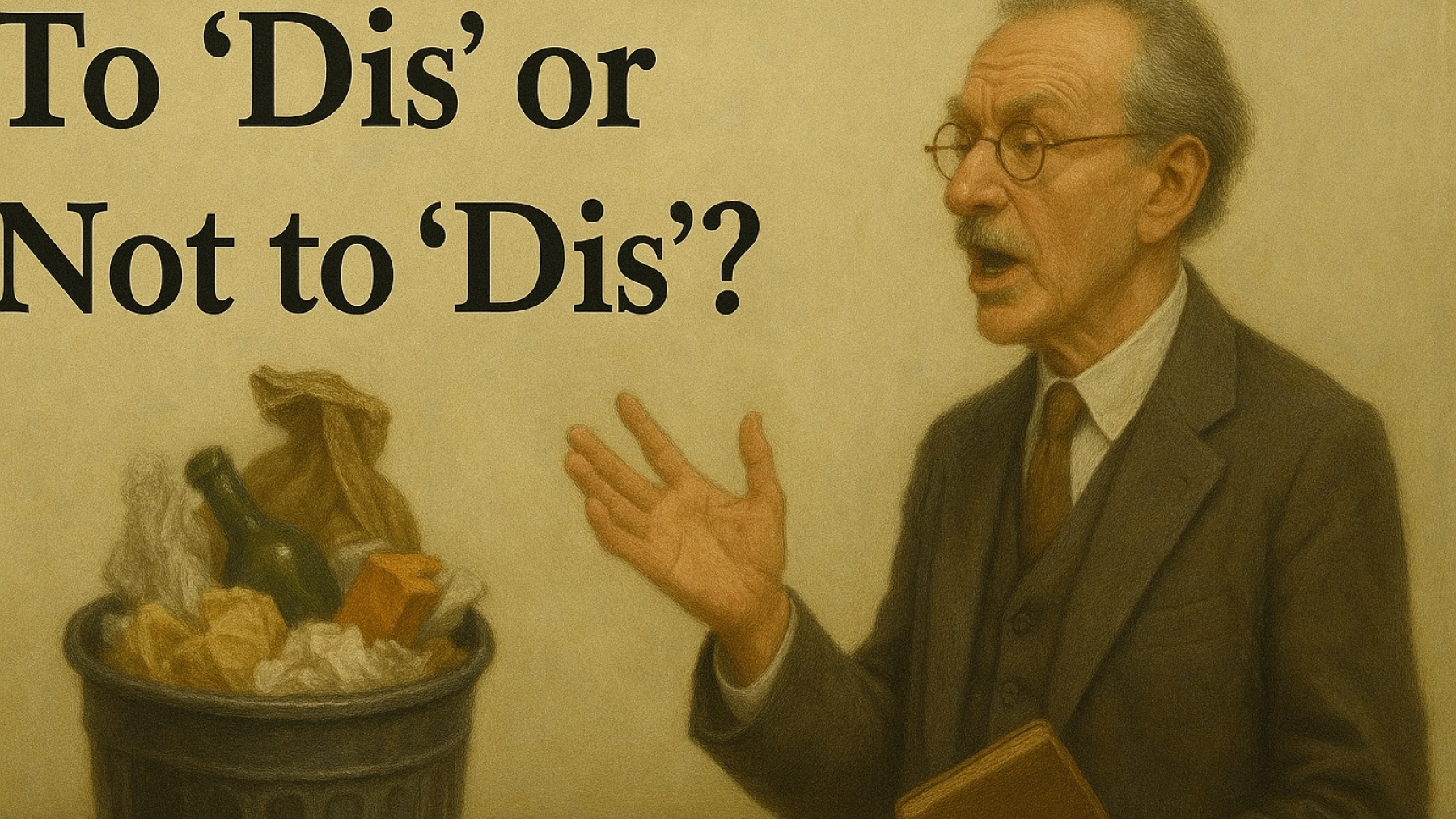
This brings me neatly to one of my favourite presentation tactics: the “Dis Technique.”
Simple, powerful, memorable… and underused. Done well, it cuts through groupthink; done badly, it just makes you sound like someone who’s going for the “Britain’s top contrarian Award.”
The idea’s simple: when everyone else is marching in one direction, take one thoughtful, well-considered step the other way. Start with something like:
- “I disagree…”
- “I dissent…”
- “I dispute the assumption…”
- “I’m distinctly unconvinced…”
and follow it with an insight that actually adds value.
Three tips for using the Dis Technique effectively:
1. Trust the doubting voice.
If something in the current narrative feels incomplete or off, listen. That tiny whisper of “the real issue is actually…” is often where the most compelling ideas live.
2. Resist the gravitational pull of groupthink.
Panel discussions, boardrooms, conferences all tend to drift towards safe consensus. The person who shares the truth the room hasn’t noticed yet instantly stands out.
3. And I have to say this: I disagree with people who advise you to “always play it safe.”
Playing it safe rarely made anyone memorable. The world’s most compelling speakers all share one trait: they dare to say something different. However, here’s the twist, I dissent from the idea that you should do it recklessly. If you’re unsure whether your bold truth will elevate you or earn you a cardboard box and a gentle security escort out of the building, run it past a trusted friend first.
My call to action:
Use the Dis Technique once this week. Share one thought you believe but haven’t heard anyone else voice. And send me your own wonderfully obscure recommendation: comedian, writer, thinker, musician, whoever. Let’s build a catalogue of the brilliant, the overlooked, and the gloriously unexpected.